
WBBSE Class X এর English বিষয়ের প্রথম গল্প Fater’s Help. এই গল্পটি তিনটি ইউনিট অর্থাৎ Unit 1, Unit 2, ও Unit 3 তে বিভক্ত। এখানে তিনটি ইউনিট এর summary দেওয়া হল, সঙ্গে তিনটি ইউনিট এর বঙ্গানুবাদ, কুইজ প্রদান করা হয়েছে যা তোমাদের প্রয়োজন মত বেছে নিয়ে পড়তে হবে । এবং সাধারন একটি ক্যুইজ দেওয়া হয়েছে যা তিনটি Unit এর বিসয়বস্ত থেকে তুলে ধরা হয়েছে ।
 Father's Help by R.K Naryan
 Total Questions: 39 | Total Marks: 55
When did Swami realize it was Monday morning?
At what time did Swami wail "I have a headache"?
Who suggested that Swami might stay at home?
Where ought Swami to have been at 9:30 AM?
What reason did Father give for Swami's headache?
According to Swami, who is afraid of Samuel?
What did Father decide to send to the headmaster?
How did Swami feel when he went to school with the letter?
Where did Swami stop to make up his mind about Samuel?
What color coat did Samuel wear?
What subject was Samuel teaching when Swami entered the class?
How late was Swami for the class?
What excuse did Swami give Samuel for being late?
How did Samuel react when he heard Swami's father sent him to school despite the headache?
Why couldn't Swami deliver the letter at the end of the day?
What did Father do with the letter when Swami returned home?
"It looked as though only a moment ago it was Friday." – Identify the Tense.
"Mother generously suggested that Swami might stay at home." – 'Generously' is an:
"I have a headache." – Which type of sentence is this?
"Father had composed a long letter." – Identify the Tense.
Topic: Father's Help
Swami realized it was Monday morning with a shudder.
Topic: Father's Help
Mother was very strict about Swami going to school.
Topic: Father's Help
Swami said Samuel is very gentle with latecomers.
Topic: Father's Help
Swami stopped on the roadside to verify if Samuel was really a bad man.
Topic: Father's Help
Samuel was teaching History when Swami entered the class.
Topic: Father's Help
Samuel praised Swami's father for his strictness.
Topic: Father's Help
The headmaster had gone on a month's leave.
Topic: Father's Help
Father tore up the letter because Swami delivered it successfully.
Read these words aloud
Shudder|Loaf|Conscience|Apprehensively
Read these words aloud
Generously|Tactics|Moustache|Arithmetic
Match the Word with Meaning
Match the Character with Action
Match the Grammar Change
Rearrange and make a sentence
Arrange Here:
Rearrange the sentence
Arrange Here:
Rearrange the sentence
Arrange Here:
Fill in the correct Preposition
Swami was lying the bench in Mother's room.
Fill in the correct Article
Father put the letter in envelope.
Fill in the correct Preposition
Swami ran the headmaster's room.
Rate this Quiz
Average Rating: 4.33 / 5 (6 votes)
Click on a star to rate:
About the Author: R.K. Narayan
R.K. Narayan (1906-2001) is one of the most significant figures in early Indian literature in English. He is best known for his fictional town of Malgudi. Some of his notable works include:
- Malgudi Days
- The Guide (For which he won the Sahitya Academy Award in 1958)
His writing style is simple, humorous, and deeply connected to the everyday lives of ordinary Indian people.
Introduction Father’s Help Story
The story revolves around a young schoolboy named Swaminathan (Swami). Like many children, Swami dreads Monday mornings and tries to avoid going to school. However, his strict father forces him to go. The story explores the relationship between a strict father and a fearful son, and how a small lie about a teacher named Samuel spirals out of control.
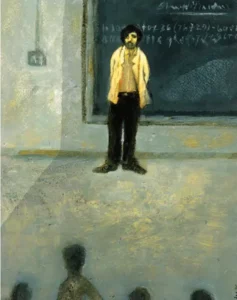
Unit 1 Summary: The Excuse and The Lie
(সোমবারের সকাল ও মিথ্যা অজুহাত)
The story begins on a Monday morning. Swami wakes up with a shudder, wishing he didn’t have to go to school. At 9:00 AM, he wails that he has a headache. His mother, being generous, suggests he can stay home. However, at 9:30 AM, when he should have been in the prayer hall, his father finds him lying on a bench.
Swami’s father is strict. He dismisses the headache excuse and orders Swami to dress up and go. Realizing his father won’t listen, Swami changes his tactics. He claims he cannot go to school late because his teacher, Samuel, is a very angry man who punishes latecomers severely. He even tells his father that the Headmaster is afraid of Samuel.
This unit sets the foundation of the conflict: Swami’s lie about Samuel to escape school.
📖 Read the Detailed Guide for Unit 1
Want the line-by-line Bengali meaning and Quiz for Unit 1? Click the button below.
Unit 2 Summary: The Letter and The Guilt
(বাবার চিঠি ও স্বামীর বিবেক দংশন)
Swami hoped his description of the “angry” Samuel would make his father keep him home. Instead, it backfired. Father decides to send a formal complaint letter to the Headmaster against Samuel. Swami attempts to protest, but his father is determined.
As Swami walks to school with the letter in his pocket, his conscience bothers him (তার বিবেক তাকে দংশন করতে থাকে). He realizes he is not sure if Samuel is actually that bad. He feels he has mixed up the “real” Samuel with the “imagined” one. On the roadside, he recalls that Samuel is actually quite friendly and regards Swami with affection. Swami feels heavy with guilt because he is about to deliver a letter containing false allegations against a good man.
📖 Read the Detailed Guide for Unit 2
Understand Swami’s confusion and vocabulary for Unit 2 here.
Unit 3 Summary: The Climax and Resolution
(স্কুলে ঘটনা ও চিঠির পরিণতি)
Swami devises a plan: he will deliver the letter at the end of the day. He hopes Samuel will do something angry during the day to justify the letter. However, Samuel behaves exceptionally gently that day. Even when Swami is late and hasn’t done his homework, Samuel does not scold him. Ironically, Samuel even praises Swami’s father for being strict about school attendance.
At 4:30 PM, Swami rushes to the Headmaster’s room to deliver the letter, only to find the room locked. The peon informs him that the Headmaster is on a week’s leave. Swami runs home with the undelivered letter.
Father mocks Swami, saying he knew Swami wouldn’t deliver it. When Swami explains the situation, Father snatches the letter and tears it up. He ends with a sarcastic remark: “Don’t ever come to me for help if Samuel scolds you again. You deserve your Samuel.”
📖 Read the Detailed Guide for Unit 3
Get the full breakdown, grammar usage, and final quiz for the story.
Major Themes of the Story
- Child Psychology: The story perfectly captures how a child’s mind works—making excuses, fear of strictness, and the confusion between truth and lies.
- Father-Son Relationship: It shows a traditional father who is strict and wants his son to be disciplined, contrasting with a more protective mother.
- Conscience (বিবেক): A major part of the story (Unit 2) deals with Swami’s guilt. It teaches students that lying about others brings mental pain.

Leave a Reply