
মধ্যশিক্ষা পর্ষদের দশম শ্রেণির English বিষয়ের দ্বিতীয় অধ্যায় তথা প্রথম কবিতা Fable যেটি লিখেছেন Ralph Waldo Emerson. এই কবিতার line by line Bengali Meaning, words meaning ও Interactive Quiz নিয়ে হাজির হয়েছে WBBSE Quiz.
We will also cover the summary, detailed analysis, and a line-by-line Bengali meaning of the poem to help you prepare for your Madhyamik exams.
Total Slides: 10
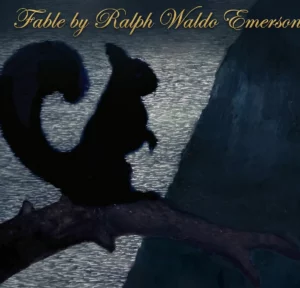
 Fable by Ralph Waldo Emerson
Total Questions: 32 | Total Marks: 50
Poem Fable Introduction
The poem “Fable” is the second chapter of the Class 10 English textbook (Bliss). It is a short but powerful poem that describes a quarrel between a mountain and a squirrel. Through this simple story, the poet delivers a profound message: every being, whether huge like a mountain or tiny like a squirrel, has a unique role to play in this world.
About the Poet: Ralph Waldo Emerson
Ralph Waldo Emerson (1803-1882) was a famous American essayist, lecturer, and poet. He is known for his philosophical writings. In this poem, he uses his signature style to explain complex life truths through simple nature imagery. His famous works include ‘Concord Hymn’ and ‘Brahma’.
Fable Summary in English (Class 10)
The poem begins with a quarrel between the Mountain and the Squirrel. The Mountain, proud of its massive size, mocks the Squirrel by calling him a “Little Prig” (a self-righteous little fellow). The Squirrel, whose name is Bun, replies calmly and wisely.
Bun admits that the Mountain is undoubtedly very big. However, he points out that size is not the only thing that matters. To make up a complete year and a complete world (sphere), all sorts of things and weather—both big and small—must exist together. The Squirrel says it is no disgrace to be small because everyone has their own place.
The poem ends with a witty comparison: while the Squirrel cannot carry forests on its back like the Mountain, the Mountain cannot crack a nut like the Squirrel. This highlights that “Talents differ” and all is well and wisely put by God.
Fable Poem Summary in Bengali (সারসংক্ষেপ)
(Fable Poem Class 10 in Bengali)
এই কবিতাটি পর্বত এবং কাঠবিড়ালির মধ্যে একটি ঝগড়া দিয়ে শুরু হয়। বিশাল আকারের জন্য গর্বিত পর্বত কাঠবিড়ালিকে “পুঁচকে নীতিবাগীশ” (Little Prig) বলে অপমান করে। এর উত্তরে কাঠবিড়ালি (Bun) খুব শান্তভাবে এবং বুদ্ধিমত্তার সাথে জবাব দেয়।
কাঠবিড়ালি স্বীকার করে যে পর্বত নিঃসন্দেহে খুব বড়। কিন্তু সে মনে করিয়ে দেয় যে, একটি বছর বা একটি পৃথিবী (Sphere) তৈরি করতে হলে ছোট-বড় সব ধরণের জিনিস এবং আবহাওয়াকে একসাথে (taken in together) থাকতে হবে। কাঠবিড়ালি বলে, ছোট হয়ে নিজের জায়গা দখল করে থাকায় কোনো অপমান বা লজ্জা নেই।
কবিতার শেষে কাঠবিড়ালি বলে, “যদিও আমি তোমার মতো বিশাল নই, তুমিও কিন্তু আমার মতো চটপটে (spry) নও।” সে শেষে একটি দারুণ যুক্তি দেয়—পর্বত হয়তো পিঠে জঙ্গল বহন করতে পারে, কিন্তু সে কাঠবিড়ালির মতো একটি ছোট বাদাম ভাঙতে পারে না। অর্থাৎ, পৃথিবীতে সবার প্রতিভাই আলাদা এবং প্রত্যেকেরই নিজস্ব গুরুত্ব আছে।
Critical Analysis & Theme
The Central Idea: “Talents Differ”
The core theme of the poem is found in the line: “Talents differ; all is well and wisely put.” Emerson wants students to understand that:
- No one is superior or inferior: Size does not determine worth.
- Interdependence: The world needs both the massive mountain to carry forests and the tiny squirrel to crack nuts and spread seeds.
- Self-Respect: Just like the squirrel, we should not feel disgraced by our position or size in life.
Word Meanings (শব্দার্থ)
Before jumping into the quiz, here are some important word meanings from the text:
- Quarrel: ঝগড়া (A dispute or argument).
- Prig: নীতিবাগীশ (One who pretends to be morally superior).
- Sphere: গোলক বা পৃথিবী (The world/earth).
- Spry: চটপটে বা প্রাণবন্ত (Active and lively).
- Disgrace: অপমান বা লজ্জা (Shame or loss of respect).
Fable Class 10 Bengali Meaning Line by Line
We hope you got this Class 10 English Chapter 2 Fable Bengali meaning properly on our interactive website of QSH India. We hope you have learn properly and enjoyed. Still, if you have any confusion and want to learn something diffrent, comment below, and also you can give us suggestions to improve these interactive tools.